A flame that speaks for a continent
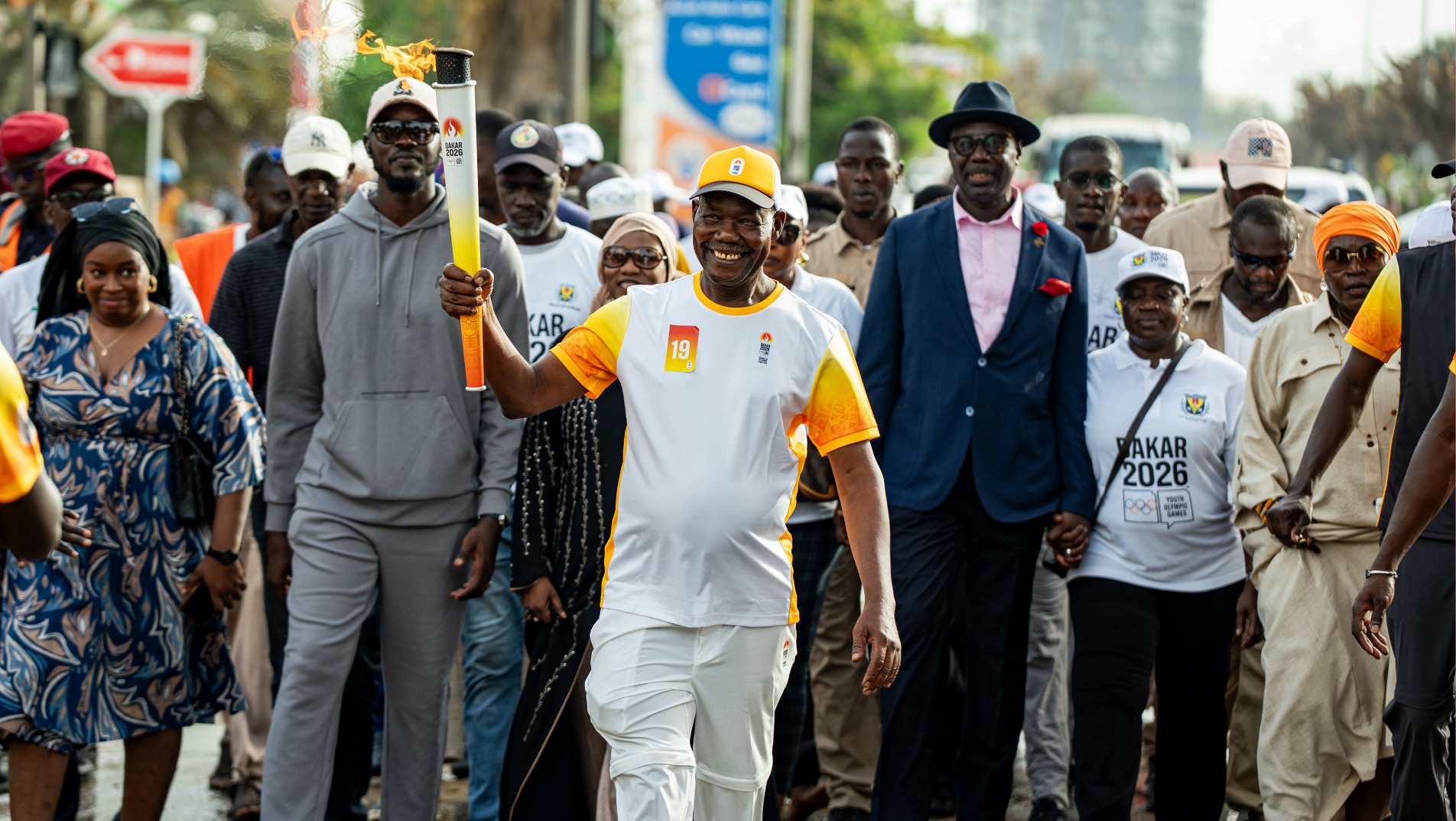
When the Olympic flame moves through a host nation, it does more than mark a countdown. It gathers, in a single corridor of light, the people who have carried a sport from neighbourhood dojos to continental federations and, eventually, into the orbit of the Olympic movement. On the road to the Dakar 2026 Youth Olympic Games, that corridor has included Souleymane Gaye — President of the African Karate Federation (UFAK) and a member of the World Karate Federation (WKF) Executive Committee — selected as a torch bearer and already having taken his place in the Olympic Torch Relay.
The WKF announcement frames the moment without flourish and without inventing a parallel story: Mr Gaye participated in the relay representing karate and the WKF. With the Opening Ceremony of Dakar 2026 described as only weeks away, the choice is presented as recognition of his contribution to the development of sport in Senegal and across Africa — a line of continuity that runs from national leadership to continental stewardship.
From national presidency to African leadership
According to the federation’s account, Gaye has played a leading role in the growth of karate first as President of the Senegalese Karate Federation, then through his positions at the Senegal Olympic Committee, and now as head of the African Karate Federation. That sequence matters for anyone who follows how karate is organised far from the glare of a major championships finals on the tatami. Federation work is rarely televised. It is the slow craft of structures, coaches, athletes, and committees — the same craft that eventually allows a sport to stand beside others when an Olympic flame is carried through a capital.
His participation in the relay is described by the WKF as an honour for karate and as a reminder of the sport’s contribution to society, particularly in Africa. The wording is deliberate: the honour is attached to the discipline and to the community it serves, not only to an individual title. In that sense, a torch in a leader’s hand becomes a public statement that African karate belongs in the multi-sport conversation that Dakar 2026 is assembling.
Karate faces on the relay route
Gaye was not alone on that stretch of the relay. He was joined by representatives of the Senegalese Karate Federation, including athletes Mbacke Seck and Khady Sow. The WKF text does not embroider their competitive résumés; it simply places them beside their federation president at a ceremonial moment that belongs as much to national karate as to continental governance. For a magazine readership that lives by kata and kumite calendars, that detail is enough: the sport’s presence on the flame’s path was visible, collective, and named.
“A memory that I will have forever”
Speaking about the experience, Gaye located the honour outside himself and inside the institution:
“It's a great success and honour, not for me but for Karate, and the World Karate Federation, to share this panel for the Olympic Flame with very famous members of the Senegalese Sports Disciplines, former and current Champions, Famous Coaches and Leaders of the main sports Disciplines in Senegal. This event was a great honour for me and a memory that I will have forever.”
The quote is revealing in its emphasis. He speaks of sharing a panel for the Olympic Flame with champions, coaches, and leaders from Senegal’s main sports disciplines — a tableau in which karate stands among peers. The memory he claims is personal; the success he names is institutional. That balance is classic federation language, but here it arrives with the concrete setting of the Youth Olympic Games host country and the concrete object of the flame.
Espinós: legacy, recognition, and Dakar
WKF President Antonio Espinós congratulated Gaye on the distinction and underlined why the relay matters for the sport’s public standing:
“Congratulations to President Souleymane Gaye for this outstanding honour and for representing our sport so well at such an important event. Karate leaves a remarkable legacy in society, and it is great to see the contribution of karate recognised through distinguished members of our community such as President Gaye. His work in Senegal and across Africa has helped strengthen the role of our sport and its connection with communities.”
Espinós then tied the personal milestone to the approaching Games:
“As karate prepares to leave its mark at the Youth Olympic Games in Dakar, this milestone involving President Gaye reminds us of the added value of karate at multi-sport events. His participation in the Olympic Torch Relay is a proud moment for karate and for the wider karate community.”
Those two paragraphs are the outer limit of what this narrative can say about the sporting programme in Dakar. The President’s formulation — that karate prepares to leave its mark at the Youth Olympic Games — is on the WKF page and is therefore usable; inventing formats, quotas, or medals would not be. What remains solid is the political and symbolic reading: African leadership recognised on the flame’s route, and karate framed as a sport whose social legacy and multi-sport value are being acknowledged in the YOG host narrative.
Why this matters beyond a single relay day
Magazine readers who follow World Championships, Karate One circuits, and continental championships know the difference between a podium photograph and a structural appointment. A UFAK president on the Executive Committee already embodies a continental voice inside WKF governance. Seeing that same figure selected for the Olympic Torch Relay of a Youth Olympic Games staged on African soil adds a second register: the Olympic movement’s ceremonial language meeting the federation language of development “in Senegal and across Africa.”
Nothing in the WKF release asks the reader to confuse a torch relay with a kumite bout. There are no scores to cite, no weight categories to list, no karategi colours to adjudicate. The story is institutional and Olympic: selection, participation, recognition, and the quoted pride of both the African president and the WKF president. In the weeks before the Opening Ceremony, that is already a substantial chapter — one that places African karate leadership inside the flame’s itinerary and, through Espinós’s words, inside the anticipation of what karate may yet contribute when Dakar 2026 opens its doors.
Sources
- World Karate Federation — UFAK President Souleymane Gaye Selected as Torch Bearer for Dakar 2026 Youth Olympic Games (25 September 2026)
- Featured photograph: wkf.net (
092326_sgaye_torch.jpeg); credit wkf.net. Caption per WKF: UFAK President Souleymane Gaye at a moment of the Torch Relay.